At the Dzherelo Centre for Social Services and Rehabilitation, 1,800 people receive regular home-based assistance. Every day, 159 social workers care for them. Older people who have no relatives or close family members need human warmth, attention, and a wide range of practical support. Social workers are the ones who come, help, and keep them company through conversation. Often, they are the only people who regularly knock on the doors of lonely individuals.
The most common requests include grocery shopping, cleaning, help with cooking, paying utility bills, and assistance with medical appointments and healthcare matters. However, as Olha Ilchyshyn, Head of the Home Care and Active Longevity Branch, explains, the most valuable aspect of this work goes far beyond the list of services.
“It is about supporting people who have no relatives. Very often, they need not only physical assistance, but simply someone to be there for them – a person who stays in touch,” she says.
We spent a day with social worker Tetiana Oliinyk, who has been working at Dzherelo for eight years and currently supports 13 people. Every day, she makes between four and six visits. Some clients she visits twice a week, while those who need more support are visited three times weekly.
“Often, people older than us ask for advice, which is deeply touching. But most of all, they need hugs, love, kind words, and sincere compliments. It is important to come with a smile, in a good mood, and to be genuine, because older people sense this very subtly. They want to see life, movement, and presence in our eyes,” the social worker explains.
Her mornings begin with phone calls. She coordinates shopping lists with clients, уточнює their needs, and records orders. In her notebooks, she carefully keeps track of all expenses and receipts for every purchase.
“We have a contract outlining what we are required to do. But people often ask for much more, and you simply cannot refuse them – so we do more,” says Tetiana.
Natalia, 55
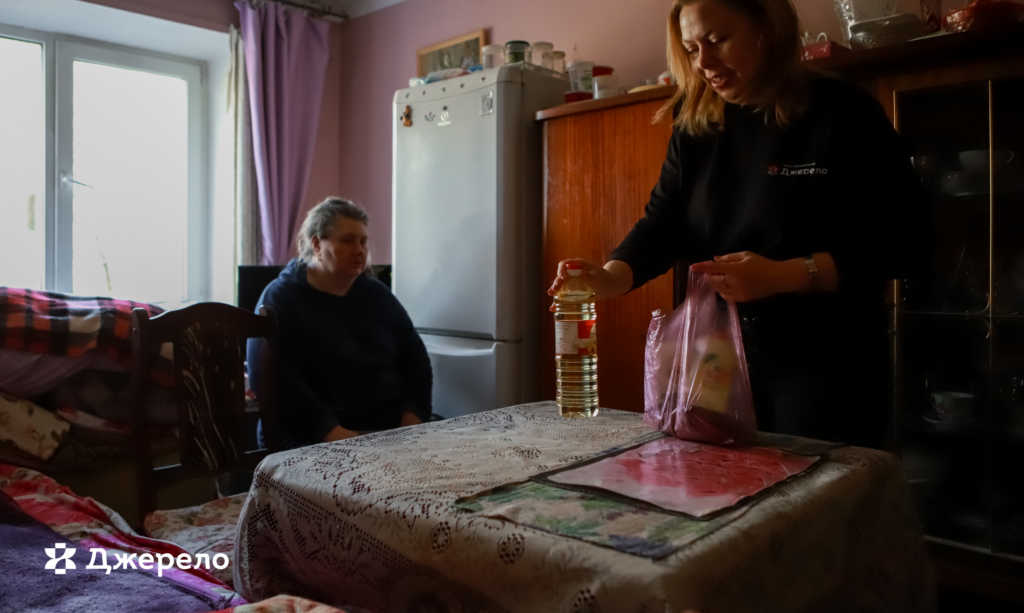
Natalia is a sincere woman with a kind heart and a good sense of humor. She is the youngest among all the people Tetiana visits. Natalia has a mild form of cerebral palsy. She worked throughout her life, but now needs support. Recently, the social worker helped her care for the graves of her relatives. Usually, Dzherelo provides transportation to cemeteries for clients, accompanied by a social worker.
“Natalia is very sociable, loves communication, and knows many people in the neighborhood, including her mother’s former colleagues. She often asks me to buy something not only for herself, but also for her neighbor – cookies or ice cream,” Tetiana says.
Svitlana, 85
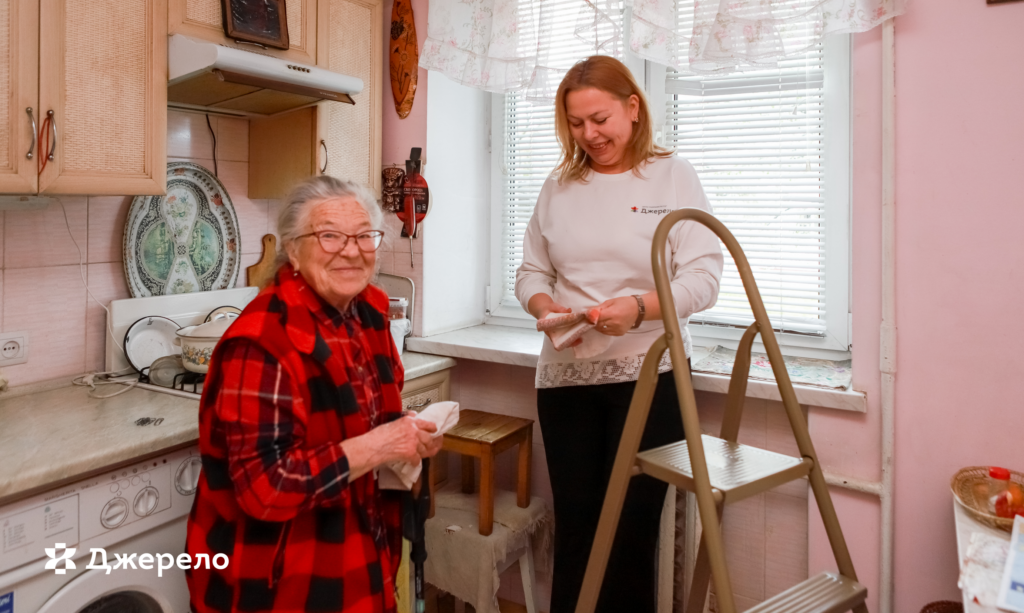
Svitlana Petrivna has her own rhythm of life. At 85, until recently she practiced yoga and Nordic walking. She remains active, wants to go to her summer house, and manages many household tasks independently. Here, the role of the social worker is not only to help, but also to protect her from activities that may endanger her health.
Tetiana Oliinyk washes windows, hangs curtains, and assists with household tasks. “She does many things on her own and is very energetic. She has been using the service for about two or three years. She lives alone, and her son is abroad,” Tetiana explains.
Valentyna, 79
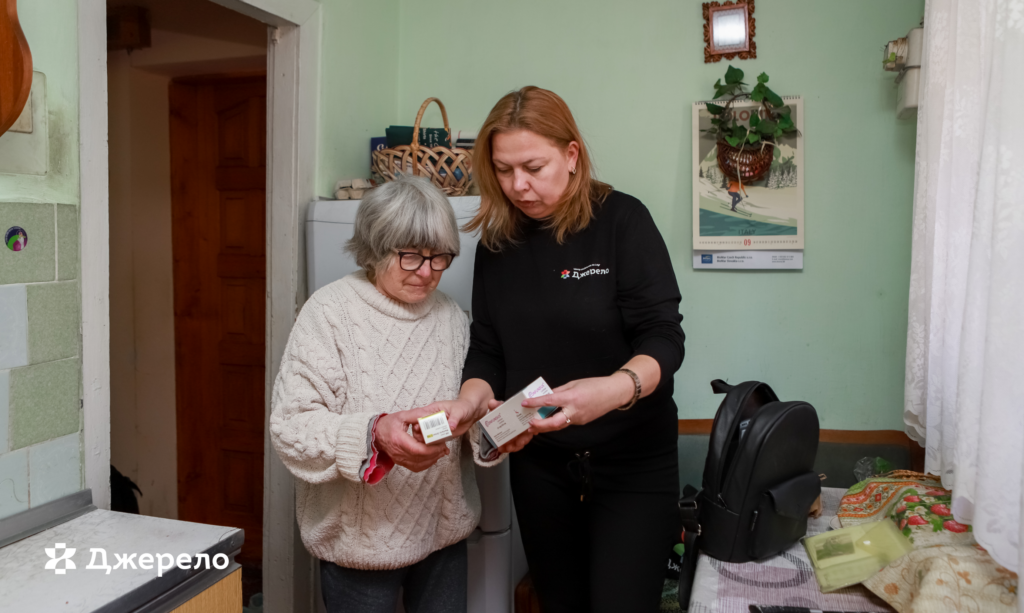
Valentyna Yukhymivna has a different story. She once moved from another region to care for her sister. Now, she herself needs assistance.
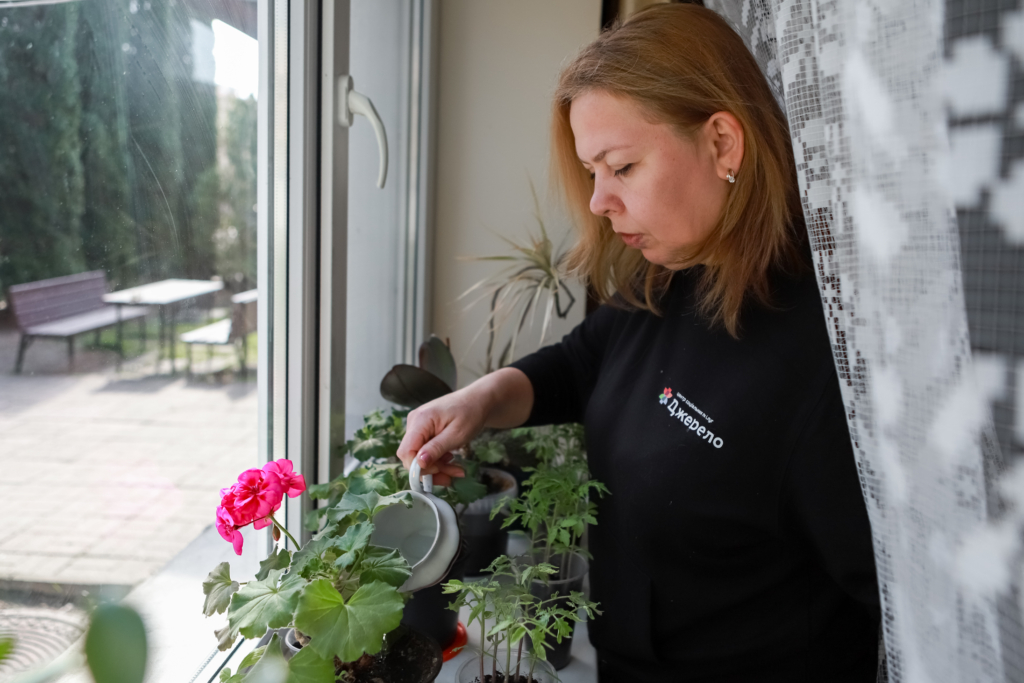
For this woman, the work of a social worker goes beyond household tasks. Most often, she needs accompaniment to medical examinations at the clinic and support in communication with her family doctor. According to Tetiana, Valentyna loves growing flowers, asks for help caring for them, and often shares flowers with the staff.
Andrii, 84, and Stefaniia, 81
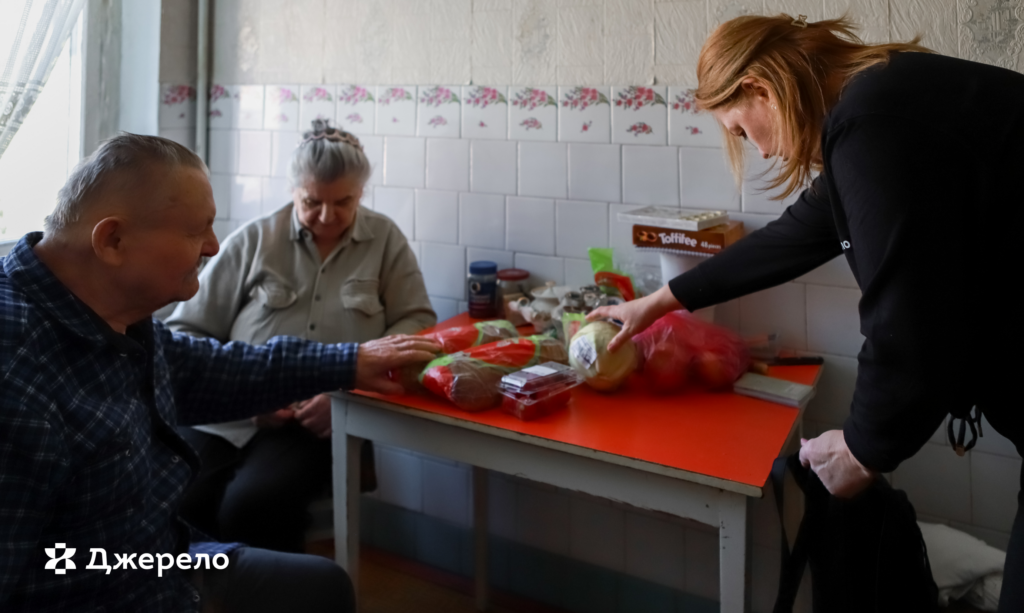
The couple has specific needs and requires systematic care. For them, Tetiana most often buys groceries at the supermarket – separately for each person according to their individual dietary needs. She also takes care of the couple’s beloved cat, Murchyk.
“Andrii needs more communication. He waits for conversations, reads the news, and is interested in the world. He asks for more time,” the worker says.
That is why Tetiana goes for walks with him and even brings books from the library – he especially enjoys history books.
Klara Ivanivna, 85
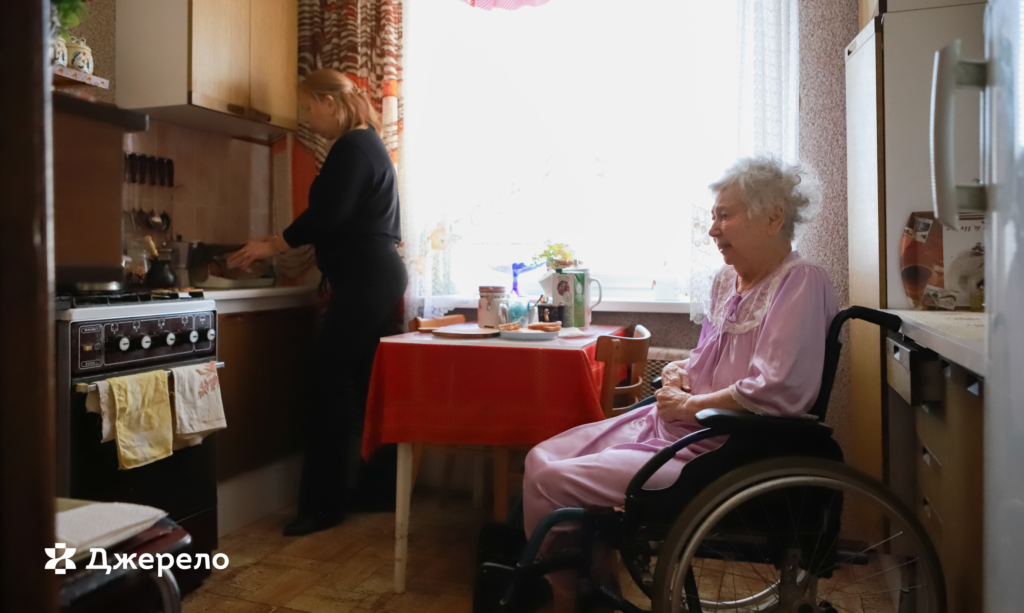
Klara Ivanivna uses a wheelchair and requires full-time care: hygiene support, laundry, and meal preparation. However, according to Tetiana, the greatest challenge is communication, because Klara Ivanivna often has strong and critical opinions about many things. Her relatives rarely visit.
“We find an approach to everyone, so that the person feels satisfied and remains in a good mood,” Tetiana says.
Home care services provide essential support with tasks people can no longer manage independently. As people age, their needs grow, and the service evolves together with them. What a person could do on their own yesterday may today become part of a social worker’s responsibilities.
We support older people who need help with daily living, want to remain active and socially engaged, seek communication, and look for new opportunities for personal development. To support their physical and emotional well-being, we also offer choir groups, choreography classes, and hobby groups. Through these activities, older people learn new things, communicate with others, and rediscover themselves.
If among your relatives or acquaintances there are people who may need such support, help them take the first step and contact us.

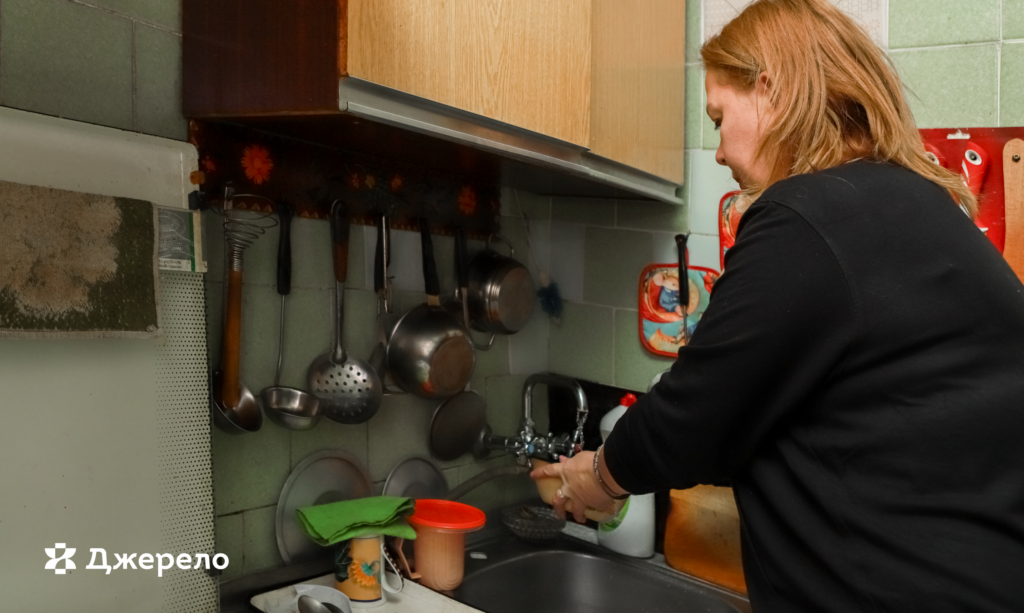
To access the service, people can call the contact center at +380 97 400 22 88 or contact their local district home-care social service office and prepare the necessary documents. Home care services are provided at the person’s place of residence.
We are here for you.