The history of the Dzherelo Centre is inseparably connected with the Feast of the Annunciation of the Most Holy Mother of God – a day that became the symbolic starting point of its birth.
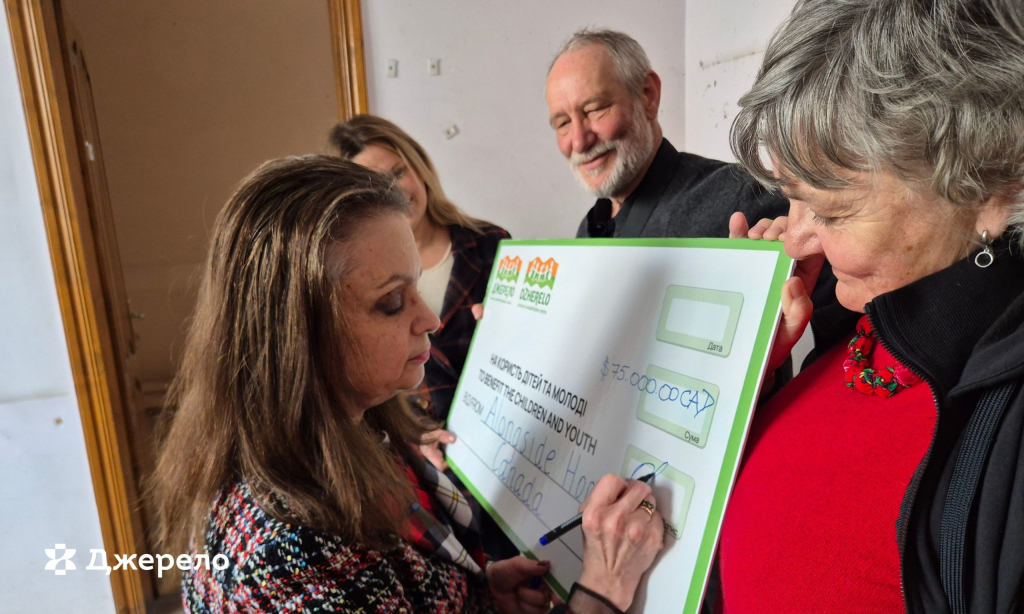
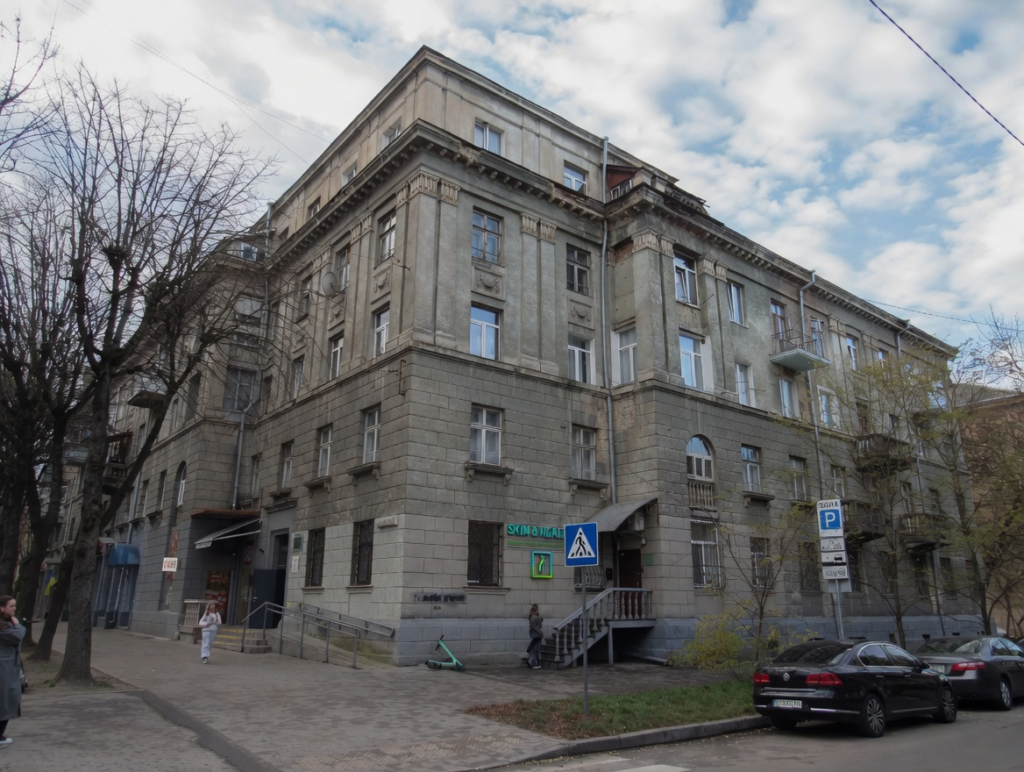
At least three foundational events are linked to this date. On the Annunciation (according to the Julian calendar), April 7, 1993, the Centre received its first premises – two rooms in a kindergarten on Shafaryka Street in Lviv. Exactly one year later, on April 7, 1994, the then mayor, Vasyl Shpitser, signed a resolution transferring a new building on Chervona Kalyna Avenue to the Centre. Later, the Centre’s chapel was consecrated in honor of the Feast of the Annunciation.
We invite you to learn more about the history and significance of this feast for our community based on a conversation with Myroslav Nykolayev, one of the establishers of the Dzherelo Centre and its director from 1993 to 2014.
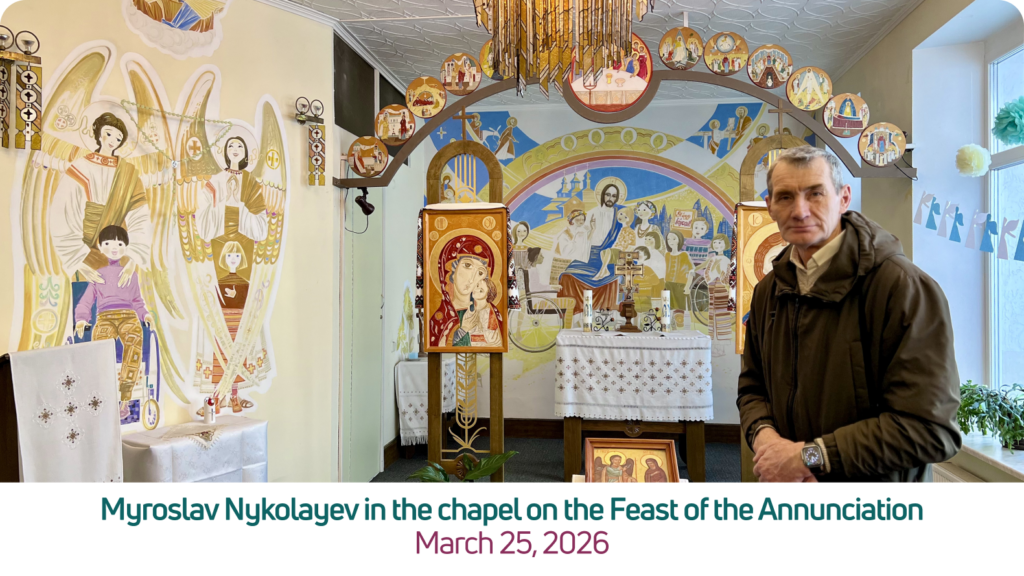
“Yes! Let’s try”: the Sign of the Annunciation that Marked the Beginning
In the 1990s, parents of children with disabilities who sought to create a space for their children faced numerous refusals from various preschool institutions. The turning point came on April 7, 1993 – the Feast of the Annunciation – when, for the first time, a “yes” was heard at Kindergarten No. 172 on Shafaryka Street: “Yes! Let’s try.”
The establishers perceive this day as deeply symbolic:
“It was a sign. It was the Mother of God who, through the words of the headmistress, Ms. Yaroslava Holovko, said to us: ‘Yes! Let’s try.’ And this day of the Annunciation became good news for our parents and children,” recalls Myroslav Nykolayev.
From these words, spoken on the Annunciation, the initiative of parents and volunteers – which would later grow into the Dzherelo Centre – received its first physical space. The premises, consisting of two rooms, required complete arrangement: specialists and educators had to be found, and renovation work carried out. On December 17, 1993, the Feast of St. Nicholas, the space was blessed, after which services for children and young people began.
From the very beginning, participants in the initiative recognized the need for a spiritual space – a chapel. This idea was later realized in the Centre’s new building at 68A Chervona Kalyna Avenue.
The Chapel as the Heart of the Building and the Dzherelo Community
A year later, the city authorities transferred an unfinished building in the Sykhiv district for the construction of the Dzherelo Centre. The relevant resolution was signed by Mayor Vasyl Shpitser on the Feast of the Annunciation, April 7, 1994.
The process of developing project documentation and reconstructing the building posed serious challenges. At that time, there were no state construction standards for a “rehabilitation centre”; only categories such as schools, clinics, and preschools existed. This complicated the design of a functional space. Another challenge was the inclusion of a chapel, as such an element was not envisaged by existing regulations.
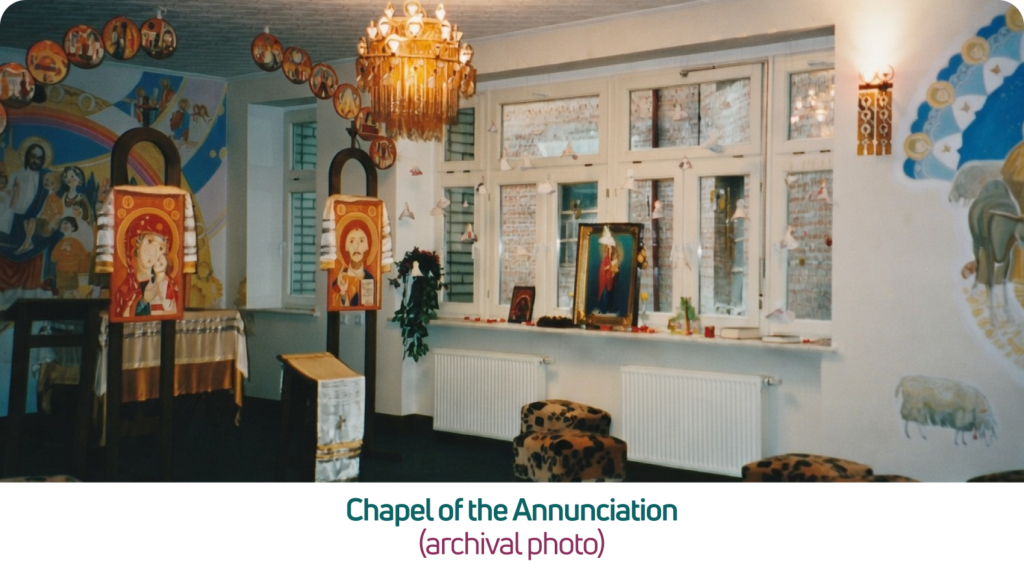
Despite this, the Centre’s leadership insisted on a key principle: the chapel must be located at the very center of the building.
“The idea was that people entering the Centre should pass through the chapel. It cannot be somewhere off to the side – it must be the heart of the space,” emphasized Myroslav Nykolayev.
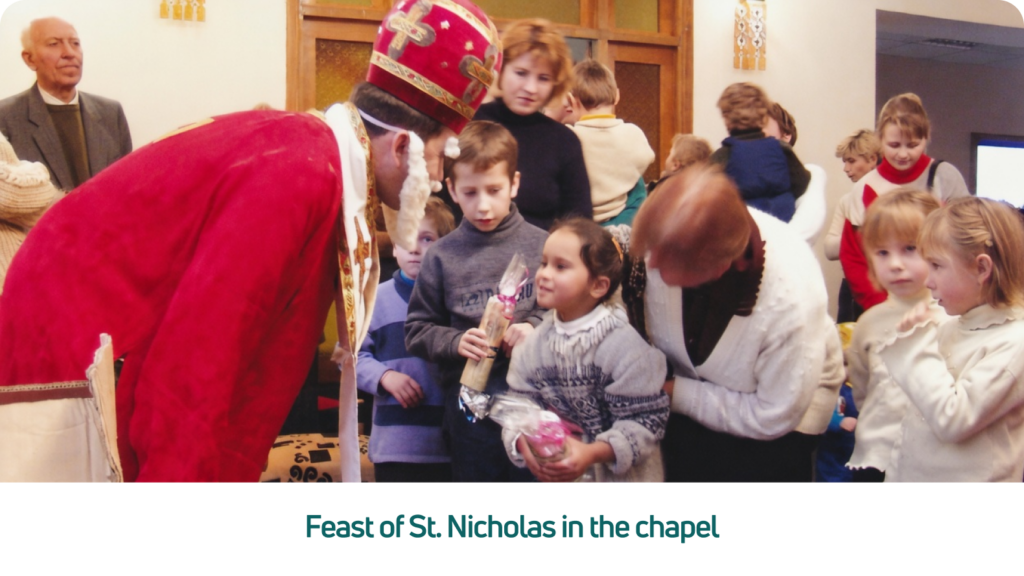
The chapel was designed in its current location by the company “Arnika,” together with a volunteer architect and friend from Canada, Volodymyr Lutsiv.
Support of the Henri Nouwen Society
An important stage in the creation of the chapel was the visit in March 2002 of representatives of the Henri Nouwen Society (Netherlands), led by Laurent Nouwen, who provided financial support for the project. Laurent Nouwen was the brother of Father Henri Nouwen, a Dutch priest and one of the most prominent spiritual writers of our time, who lived and served for many years in the L’Arche Daybreak community in Toronto.
Zenia Kushpeta, one of the establishers of the Dzherelo Centre, first met Laurent Nouwen in 1996 at Father Henri’s funeral in the Netherlands. It was then that initial contacts were established and conversations about supporting Dzherelo began.
According to the agreement, the chapel had to be completed within eight months – from March to October 2002.
“As a lawyer from a distinguished legal family, Mr. Laurent even set the exact hour for the consecration. One of the funding conditions was that the chapel be consecrated on October 20, 2002, at 10:00 a.m.,” recalls Myroslav Nykolayev.
All construction and preparatory work was completed on time, and the consecration took place as scheduled.
Consecration of the Chapel
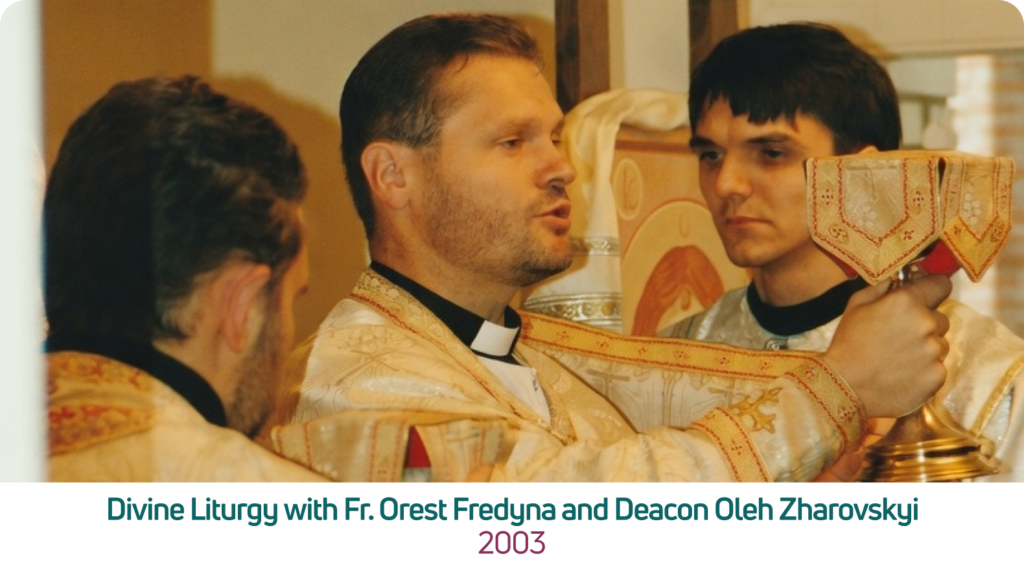
The chapel of the Dzherelo Centre was consecrated on October 20, 2002, by Archbishop and Metropolitan of Lviv Ihor Vozniak, concelebrating with Fr. Orest Fredyna and Fr. Vasyl Ivaniv.
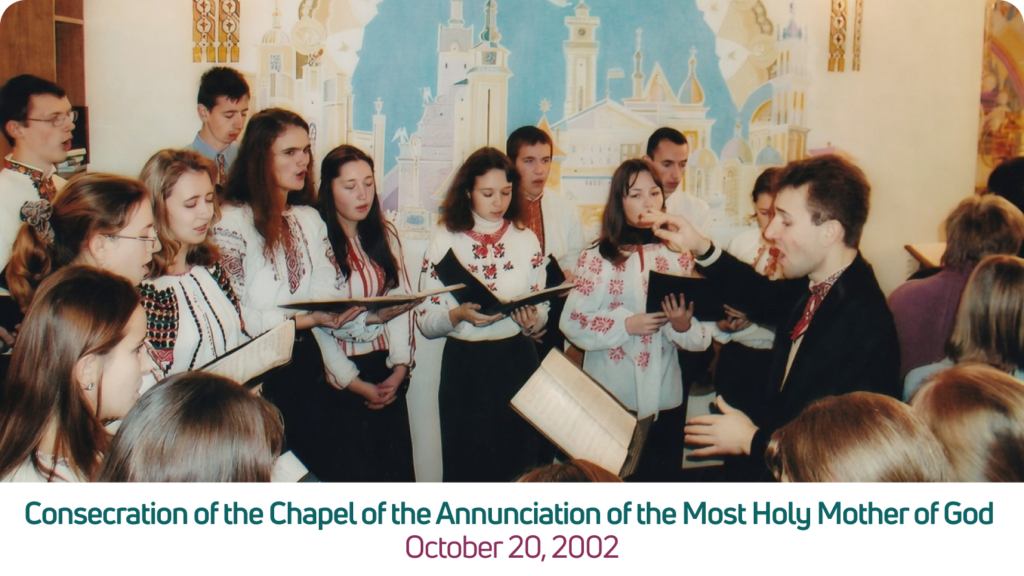
This is attested by a certificate issued by Metropolitan Ihor Vozniak on April 6, 2011, concerning the blessing of the chapel: “…on October 20, 2002, in the premises of the Dzherelo Centre in Lviv, at 86A Chervona Kalyna Avenue, I performed the blessing of the Chapel of the Annunciation of the Most Holy Mother of God and placed the antimension on the altar.”
During the consecration, commemorative holy cards were distributed to all participants:
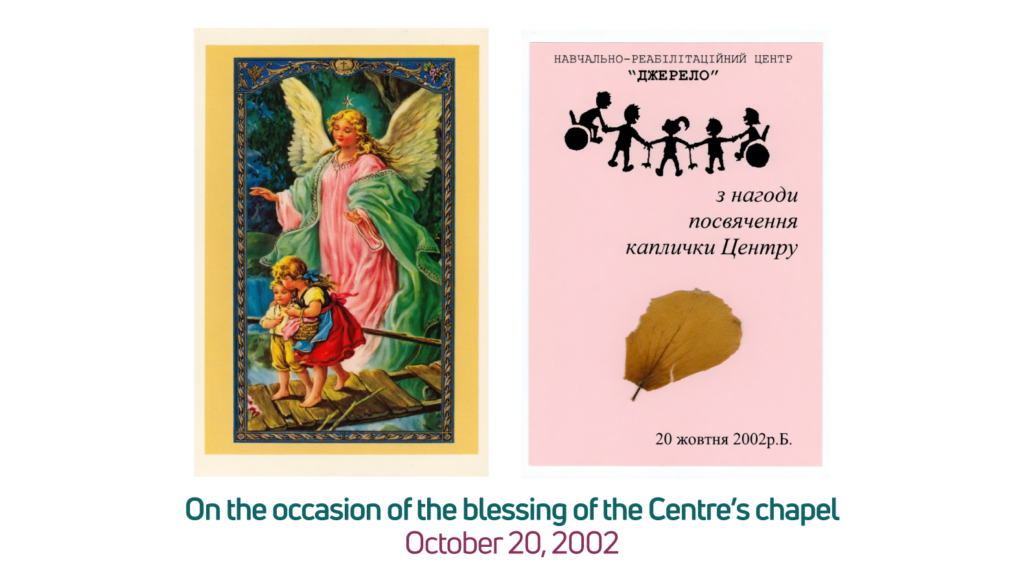
The name of the chapel carries symbolic meaning and is directly connected to the events of April 7 – the Feast of the Annunciation, which became the starting point in the history of Dzherelo.
Iconostasis and Murals
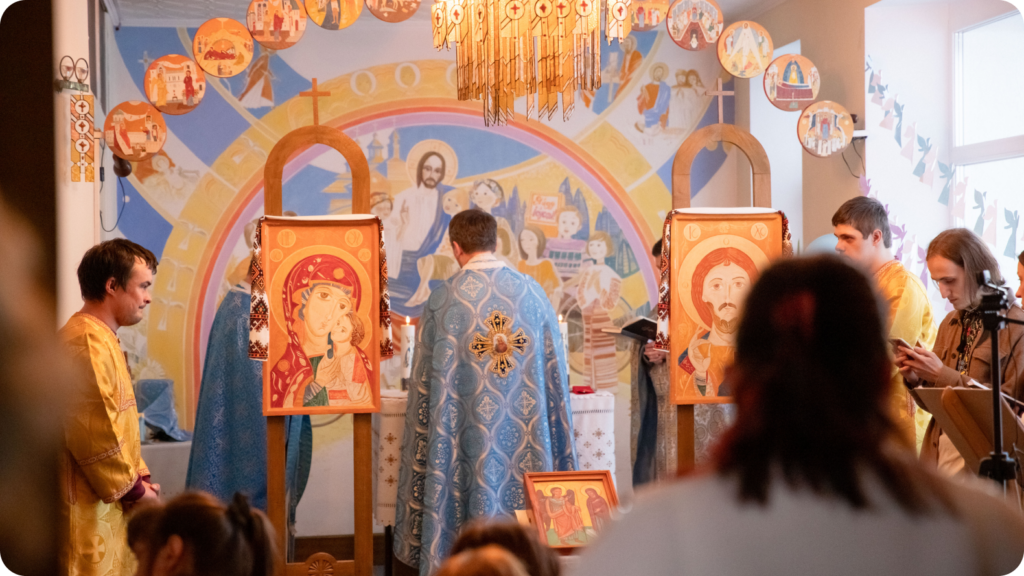
The artistic decoration of the chapel was created by Ukrainian artists. The icons were painted by Andriy Komarnytskyi, an iconography instructor, and the murals by Borys Yavorskyi, a professor at the Academy of Arts and a sacred artist.
“Andriy Komarnytskyi painted the main icons of Christ and the Mother of God, as well as the icon of the Annunciation… He worked in one of the rooms of the Dzherelo building, which at the time had no heating, but the cold did not prevent these icons from coming into being,” recalls Myroslav.
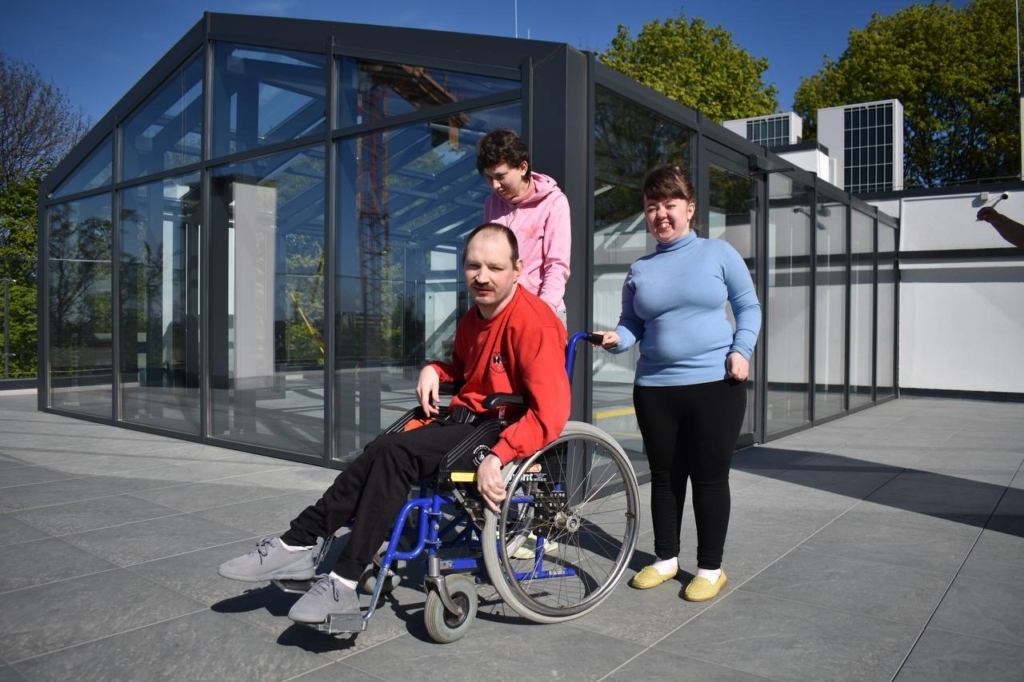
An important role in shaping the conceptual content of the murals was played by Zenia Kushpeta, one of the establishers of the Centre, who also deeply cared about the spiritual growth of the community and the meaningful enrichment not only of the chapel, but of Dzherelo’s everyday work. The murals incorporate elements that reflect the lived experience of people with disabilities, including depictions of a wheelchair.
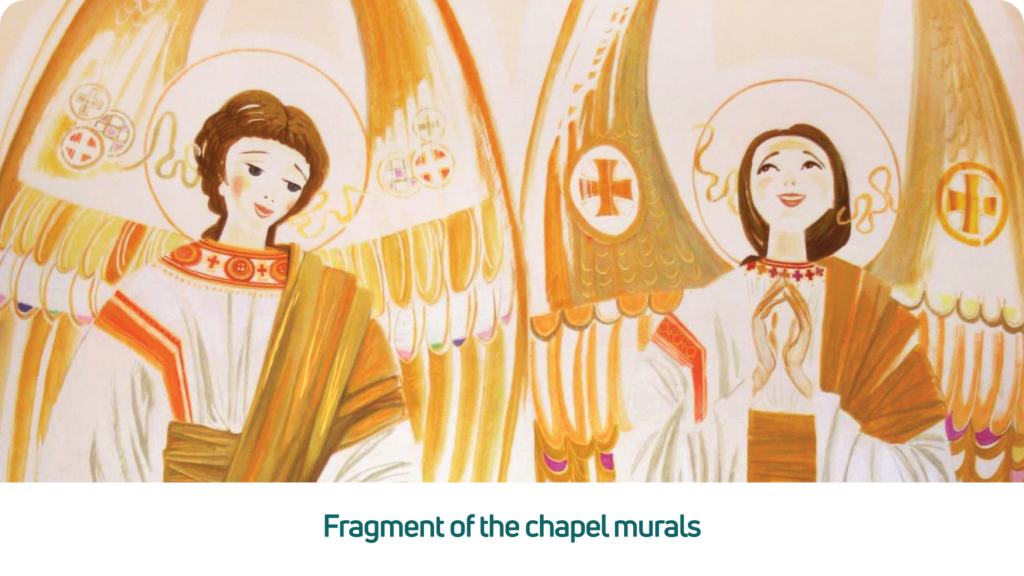
On the walls, alongside angels, one can see children in wheelchairs, Lviv landscapes, and icons connected with the life of the Centre, including the Holy Family – reflecting Dzherelo’s work not only with children and youth, but with entire families.
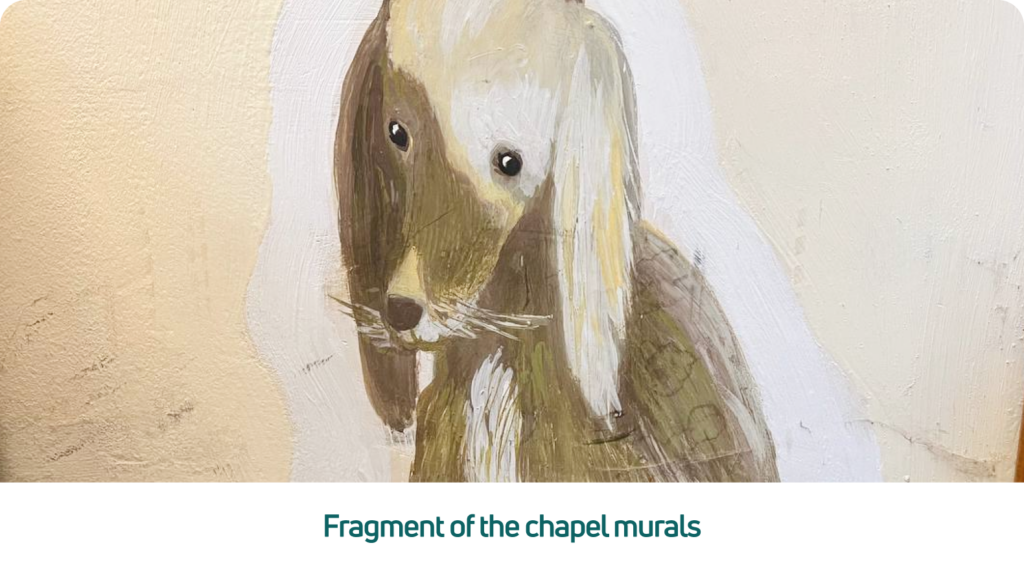
A small but meaningful detail is the image of a dog:
“…because children love dogs,” Myroslav explains simply.
This familiar and beloved animal symbolizes the wholeness of family life that Dzherelo seeks to support.
Particular significance is carried by the images of angels who guide and accompany children—regardless of whether they have a disability. In scenes depicting Lviv landscapes, angels are likewise present alongside their children, including children with disabilities.
All of this is intended to help families accept children with disabilities, to affirm that every person possesses God-given dignity, and to make the space of the chapel welcoming, comprehensible, and open to all visitors.
The Banner
At the center of the banner’s composition is the scene of the Annunciation: the Archangel Gabriel and the Virgin Mary. It is the moment of encounter between divine initiative and human response – the very “Yes” through which the history of salvation begins. Here, Mary is portrayed as the one who accepts, trusts, and opens herself to God’s will.
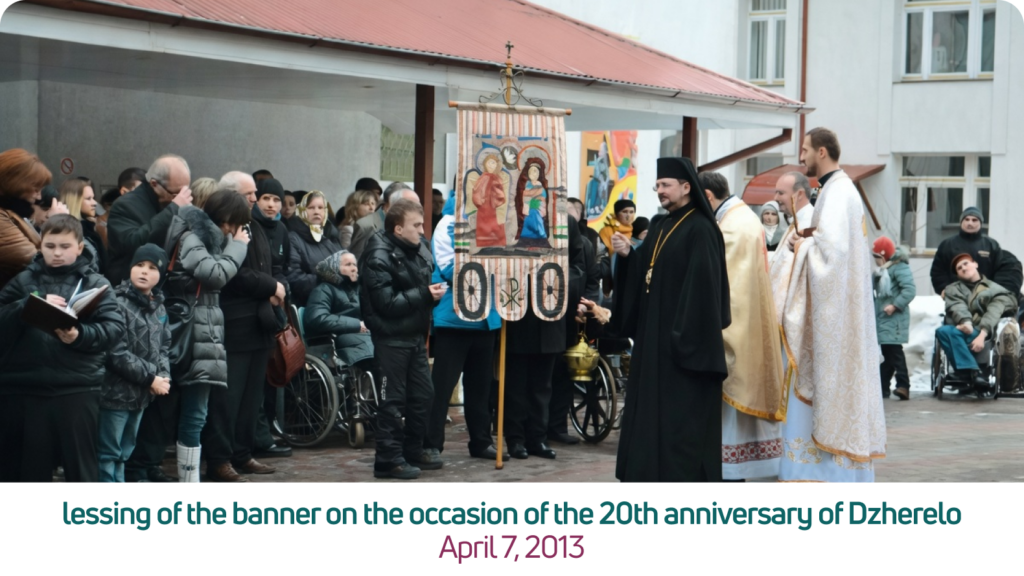
A distinctive feature of the banner is its embodiment within the lived context of people with disabilities. One of the most powerful symbols is the wheelchair wheel, integrated into the composition.
The Dzherelo banner was blessed by Bishop Bohdan Dzyurakh (now Apostolic Exarch for Ukrainian Greek Catholics in Germany and Scandinavia) at the Church of the Nativity of the Most Holy Mother of God. Following the blessing, a solemn procession proceeded in a prayerful march from the Church of the Nativity to the Dzherelo Centre.
The First Chaplain
Since July 14, 2011, the chaplain of the Centre has been Fr. Oleh Zharovskyi of the Ukrainian Greek Catholic Church.
“…I appoint the Reverend Father Oleh Zharovskyi as chaplain… for fruitful service to Christ’s Church,” states the decree.
“The Feast of the Annunciation is the feast without which the awaited Messiah would not have come. This feast gave us Jesus Christ. This day is the fulfillment of the hope and expectation of all the prophets and patriarchs since the Fall of Adam, when the Lord promised us the Messiah and Savior,” said the chaplain of Dzherelo, reflecting on the profound significance of this Marian feast.
The Spiritual Life of the Chapel Today
Today, the chapel is a place of regular spiritual life for the community, combining liturgical services, catechesis, and shared fellowship.
Services are currently led by Fr. Vasyl Tuziak of the Ukrainian Greek Catholic Church.
The Divine Liturgy is celebrated approximately once a month (without a fixed day), and more frequently when needed. In addition, spiritual meetings are held for various groups: adult workshop participants, youth, and children preparing for First Confession and Solemn Holy Communion.
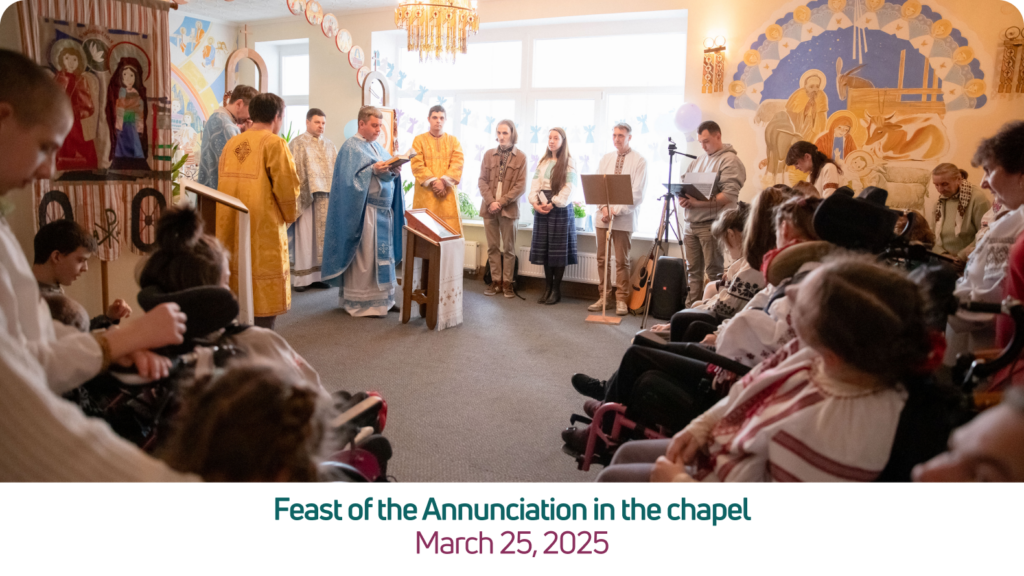
An important part of the chapel’s life is communal prayer, where participants share intentions, pray together, and receive spiritual support. Children also have the opportunity for individual blessings or participation in the Sacrament of Confession according to their readiness.
The chapel also hosts services in significant life circumstances, including prayers for deceased members of the community.